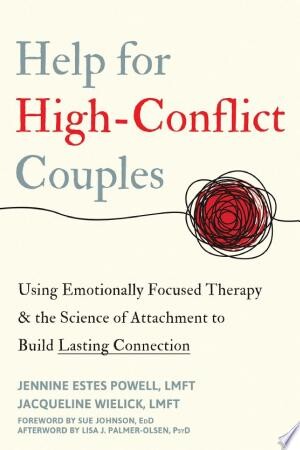
Help for High-Conflict Couples
Using Emotionally Focused Therapy and the Science of Attachment to Build Lasting Connection
By Jennine Estes Powell,Jacqueline Wielick
Concepts
- Emotionally Focused Therapy (EFT)
- A research-backed couples therapy model developed by Sue Johnson that targets the attachment bond underlying conflict, helping partners move from reactive cycles to emotional safety.
- Negative Cycle
- The repetitive pattern of escalation and withdrawal that high-conflict couples get trapped in, driven by underlying attachment fears rather than the surface content of arguments.
- Primary vs. Secondary Emotions
- The distinction between the raw, vulnerable feeling underneath a reaction (primary) and the more defensive emotion expressed outwardly (secondary), such as hurt beneath anger.
- Attachment Injuries
- Specific moments of abandonment or betrayal during times of distress that leave a lasting wound in the relationship and must be explicitly processed to restore trust.
- Polyvagal Theory
- The science of how the autonomic nervous system governs fight, flight, freeze, and social engagement responses, explaining why high-conflict partners become physiologically flooded during arguments.
Chapters
- Foreword
- Introduction
- Chapter 1. What's Love Got To Do With It?
- Chapter 2. Why Emotionally Focussed Therapy?
- Chapter 3. Cooling Down
- Chapter 4. Caught In the Cycle - Identifying The Pattern
- Chapter 5. Trauma's Impact On Connection
- Chapter 6. Resolving Past Hurts
- Chapter 7. Let's Talk Aboiut Sex
- Chapter 8. Celebrate, Connect, Advance
- Afterword
- References
Rating
Topics
- Emotionally Focused Therapy, EFT, Conflict, High Conflict, High Conflict Couple, Repair, Communication, Past Trauma, Insecure Attachment, Attachment Theory, Attachment Styles, Anxious Attachment, Avoidant Attachment, Secure Attachment, Disorganized Attachment, Attachment Needs, Negative Cycle, Fight-Flight-Freeze, Fight-Flight-Freeze-Fawn, High Conflict Histories, PTSD, Emotional Responsiveness, Accessibility, Responsiveness, Engagement, Reactionary Patterns, Cooling Down, Primary Emotions, Secondary Emotions, Fear of Abandonment, Fear of Rejection, Fear of Conflict, Hyperarousel, Hypoarousal, Deep Breathing, Personal Baggage, Trauma Response, Tender Spots, Polyvagal Theory, Co-Regulation, Past Hurts, Unmet Needs, Vulnerability, Attachment Injuries, Need Fulfillment, Sexual Dynamic, Erotic Blueprints, Celebrate Positives, Relationship Rituals, Regular Checkins
Published
- January 2, 2024
Publisher
- New Harbinger Publications
Links